Best Facebook Ads automation tools
Introduction
Facebook Ads automation tools take over the repetitive parts of running Meta campaigns: building and launching ads in bulk, pausing and scaling them on rules, and, at the far end, handing bids and budgets to an AI. Done well, automation gives a media buyer back the hours that Ads Manager eats and applies decisions more consistently than a person checking dashboards twice a day.
Every one of these tools shares a dependency that few of them mention: the conversion event. A rule that scales ad sets when cost per result falls is only as clever as the result it measures. If that result is a form fill or an add-to-cart rather than a paying customer, automation will scale the wrong ads faster than a human ever could. So the order of operations matters: get the conversion right first, ideally server-side and tied to revenue, and automate second.
The tools below do four different jobs. Bulk launchers (AdManage) remove the manual work of getting hundreds of ads live with consistent names, UTMs and settings. Rules and optimisation tools (Adscook, AdEspresso, Adhook and Meta's own automated rules) pause, scale and duplicate on conditions you set. Cross-channel platforms and AI optimisers (Adriel, Marin Software, Albert.ai, Adcore) report on or shift budget across Meta and other networks. Data plumbing (LeadsBridge, Able CDP) automates what happens around the ads: leads into the CRM, and real conversions back to Meta.
Key features to compare when choosing Facebook Ads automation tools:
- What is actually automated. Launching, rules and AI bidding are different products. Work out where your hours go before you buy; most teams lose them at launch, not at optimisation.
- Depth of Meta support. Several long-standing names now treat Meta as one channel among many, or only as a feed destination. Check that the features you need exist for Facebook and Instagram specifically.
- Control and transparency. Can you see why a rule fired, preview a change and undo it? Start with notifications rather than actions, and be wary of any optimiser you cannot inspect.
- Pricing model. Flat fees are easy to budget. A percentage of ad spend, or tiers by spend, means the tool earns more when you spend more, whatever the results.
- Naming and UTM discipline. Consistent ad names and UTM parameters set at launch are what make attribution possible later. Tools that enforce them save a clean-up job downstream.
- Signs of life. A few products in this category have not shipped anything in years. Stable can be fine, but check the changelog before you build a workflow on it.
- The conversion data underneath. Rules and AI bidders act on what Meta reports. Browser-side tracking misses conversions blocked by browsers and consent settings and cannot see purchases completed later or offline.
In this comparison made by our digital marketing experts, we examine the top Facebook Ads automation tools, highlighting their strengths, weaknesses, pricing and the kind of team each one suits.
AdManage.ai

| Price | Flat monthly fee, no percentage of ad spend: Essential £199.99/month (1 ad account), In-House £499.99/month (5 accounts), Agency £999.99/month (10 accounts), Enterprise on request; 7 to 30-day money-back guarantee |
| Channels | Meta (core), TikTok, Google, Microsoft, Snapchat, Pinterest, Reddit, X, LinkedIn, AppLovin, Taboola, ChatGPT Ads and others; 15 ad channels in total |
| Key features | Bulk launching from Drive, Dropbox, Frame.io, Canva or a Google Sheet; saved naming conventions, UTMs and Meta enhancement defaults; Post ID and partnership ad relaunch; pause/scale automations; creative reporting; API and MCP access |
AdManage is a bulk ad launching platform for teams that put a lot of creative live on Meta and would rather not build each ad by hand. You import creative from your computer, Google Drive, Dropbox, Box, Frame.io, Canva, Figma, SharePoint or a Google Sheet, set up the batch once (ad sets, copy, links, naming), preview it, and publish. Saved launch settings carry naming conventions, UTM parameters and copy into every batch; you choose which of Meta's creative enhancements may be applied to images, videos and carousels and keep that choice as a default; and existing posts and partnership ads can be relaunched by Post ID so their likes and comments come with them. Meta is the core channel, with TikTok, Google, Microsoft, Snapchat, Pinterest, Reddit, X, LinkedIn, AppLovin, Taboola and ChatGPT Ads among the fifteen it supports, and there is a public API and an MCP connection for launching and reporting from Claude or ChatGPT.
What customers praise is time, quoted in hours: ARCO estimates 80 to 100 hours saved a month, MoneyGram's case study counts 866 hours of setup removed, and the site's counter shows more than a million ads launched in the last 30 days. Pricing is flat with no percentage of ad spend, which is rarer than it should be: Essential is £199.99 a month for one ad account and two team members, In-House £499.99 for five accounts, Agency £999.99 for ten, and Enterprise is on request, with a 7 to 30 day money-back guarantee. The fair caveats are that it is a launcher first: Essential includes a single monitoring or comments rule, and the pause-and-scale performance automations only start on the In-House plan. The entry price is also well above the cheapest Meta-only uploaders, so it earns its keep at volume rather than for a handful of ads a month, and its SOC 2 Type II audit is still in progress.
AdManage is our featured pick because launching is where most teams lose their hours, and because it treats consistent naming and UTMs as part of the product rather than the user's problem. That discipline is exactly what makes attribution possible afterwards: when every ad carries a parseable name and correct UTM parameters, Able CDP can tie each purchase back to the ad that produced it and send that revenue to Meta as a server-side conversion. AdManage makes the ads consistent and measurable; Able makes sure Meta learns from the right outcome.
Able CDP
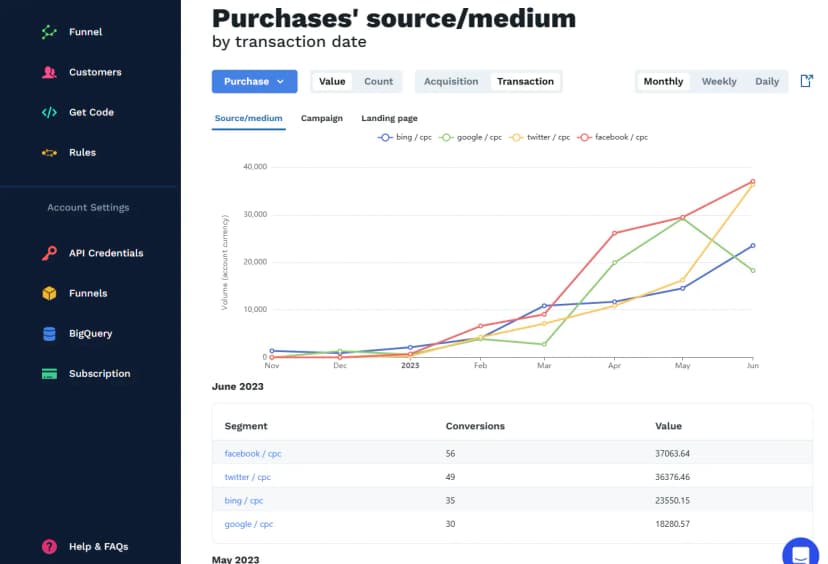
| Price | $49/month ($145/month with conversions API integrations) for up to 300,000 processed events per month, $5 for each additional 100,000 events above first 500,000 events tracked; no revenue-based cap or fees |
| Sends conversions to ad platforms | Yes, attributed to the original click ids. Supports Meta Ads, Google Ads, TikTok and Pinterest |
| Channels | Web, call tracking (using CallRail and similar third-party products), mobile app tracking (requires custom integration) |
| RoAS reporting | Built-in revenue attribution reporting, reporting via ad platforms’ conversions APIs, custom reporting using third-party BI platforms via BigQuery data warehouse, AI-assisted reporting and analysis in AI assistants via MCP server |
| Cookieless tracking | Native cookieless tracking of single-page applications and third-party checkouts like Stripe payment links; cookieless attribution of offline conversions based on previously tracked lead sources |
| Data export | Real-time BigQuery events export; manual reports export to CSV |
| Key features | Server-side tracking, ad tracking and marketing attribution |
Able CDP is not a launcher or a rules engine. It automates the part of Facebook advertising that every tool on this page depends on: telling Meta which ads produced paying customers. Able tracks the visitor from ad click through sign-up, lead or checkout, connects that journey to the purchase when it happens in Stripe, a CRM or your back end, and sends the conversion to Meta's Conversions API with its revenue and the original click ID attached. It does the same for Google Ads, TikTok and Pinterest, with server-side tracking that does not depend on third-party cookies.
This matters for automation in particular because a rule or an AI bidder never questions its inputs. Meta's pixel misses conversions blocked by browsers and consent settings, cannot see purchases that complete days later or offline, and counts whatever it is told to count. Feed it add-to-carts and automation will find you more add-to-carts. With Able, the cost per result that a rule watches and the ROAS an optimiser chases are calculated from real purchases, including the ones that happen after a trial, a sales call or an invoice. The same data powers built-in revenue attribution reports, so you can check a tool's decisions against what customers actually paid. Plans start at $49 a month, or $145 with conversions API integrations, with no revenue-based fees.
Think of Able as the layer underneath the rest of this list. AdManage gets consistently named, correctly tagged ads live; Able ties each sale back to them. Adscook, AdEspresso and Meta's own automated rules pause and scale on cost per purchase; Able makes that figure true. Albert.ai and Marin Software move budget between channels; Able gives them comparable, revenue-based conversions on each one. Get the conversion right first and every other tool here works better.
Would you like to try Able CDP? Sign up for a free trial
Adcore
| Price | $79.99/month per app billed yearly ($139.99 monthly); all apps $99.99/month yearly ($169.99 monthly); free Effortless Feed tier; 21-day trial |
| Channels | Google Ads and Microsoft Advertising; Meta and Amazon as product feed destinations only |
| Key features | Feeditor product feed management; Views campaign building and automation; Semdoc account analysis; Alerter 24/7 alerts; free Effortless Feed |
Adcore is a Toronto-listed marketing software company whose suite is a set of separate apps: Feeditor for product feed management, Views for building and automating campaigns, Semdoc for account analysis, Alerter for around-the-clock alerts, and a free Effortless Feed tier that pushes products to Google, Amaz...
AdEspresso
| Price | Starter $49/month (up to $1,000 monthly ad spend); Plus $99/month (unlimited spend, 15 seats); Enterprise from $259/month; 14-day free trial |
| Channels | Facebook and Instagram |
| Key features | Split testing; cross-campaign performance triggers; campaign approval; multi-page bulk creation and white-label reports on Plus; API access and Salesforce sync on Enterprise |
AdEspresso, owned by Hootsuite since 2017, is one of the oldest names in Facebook and Instagram ad optimisation. Its core is split testing: build a campaign, let it generate the combinations, and see which audience, image and headline wins. Around that sit campaign approval for teams and clients, cross-campai...
Adhook
| Price | On request: Essentials (1 brand, up to €5,000 monthly ad spend), Professional (5 brands, up to €10,000), Enterprise (10+ brands, unlimited spend) |
| Channels | Facebook, Instagram, LinkedIn, TikTok, X and Google Ads |
| Key features | Social media management suite with an ads module; IF/THEN automatic optimisation rules; automated campaign creation for branches and locations; campaign templates and approval workflows |
Adhook is a Swiss social media management suite, in its own words an operating system for social media, with an advertising module for Facebook, Instagram, LinkedIn, TikTok, X and Google Ads. It is built for organisations with many moving parts: corporates, universities, insurers, car dealers, franchises and ...
Adriel
| Price | Not published; plans quoted after a demo and billed annually (previously listed from $500/month) |
| Channels | 650+ data sources including Meta, Google Ads, LinkedIn, TikTok, YouTube, GA4, Search Console, Shopify and Naver |
| Key features | Cross-channel dashboards and reporting; custom KPI alerts and goal pacing; campaign on/off, budget, schedule and CPC bid edits from the dashboard; AI insights; AI ad copy and image generation |
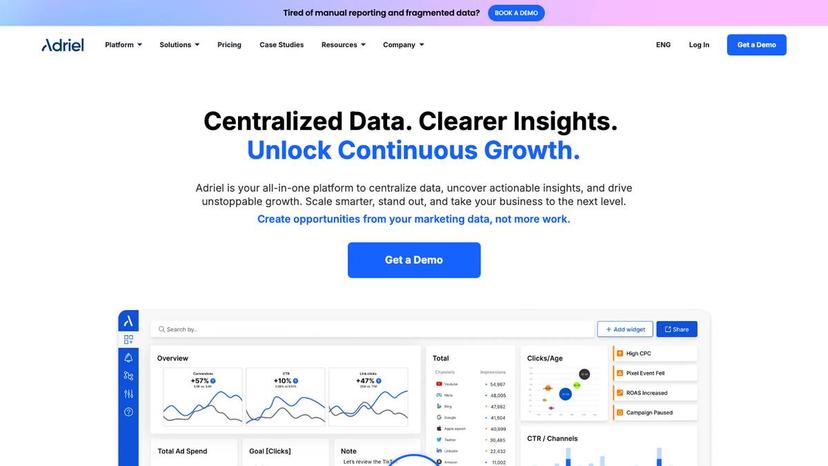
Adriel is a marketing data platform first and a campaign tool second. Its core is the dashboard: more than 650 data sources, including Meta, Google Ads, LinkedIn, TikTok, YouTube, GA4, Search Console, Shopify and Naver, normalised into one place with templates, custom KPI alerts, goal pacing and AI insights t...
Adscook
| Price | Flat fee by ad spend tier, from $29/month (up to $5,000 monthly spend); no percentage of spend; 7-day free trial, no card required |
| Channels | Facebook and Instagram only |
| Key features | 24/7 automation rules on ROAS, revenue, CPA, spend and reach; ad and ad set duplication; budget rebalancing; lookalike testing; hundreds of ad variations created at once |
Adscook is a Facebook and Instagram-only ads management platform built around two jobs: creating variations and automating optimisation. On the creation side it combines audiences, images, copy and placements into hundreds of ad variations in a few seconds for A/B testing. On the automation side, rules run ar...
Albert.ai
| Price | Not published; enterprise pricing on request |
| Channels | Facebook, Instagram, Google, Bing, YouTube, TikTok and DV360 |
| Key features | Autonomous AI that shifts budget across channels, adjusts bids and optimises audiences and creative without manual rules; owned by Zoomd |
Albert is an autonomous AI for paid media, now owned by Zoomd. Rather than giving you rules to write, it takes over execution inside your existing ad accounts: shifting budget between channels, adjusting bids, and testing audiences and creative combinations on its own. It claims to cover 90% of the biddable u...
LeadsBridge
| Price | Free plan (50 leads/month, 1 bridge); Starter up to 2,000 leads/month; Pro up to 300,000 leads/month with a 14-day trial; Business $999/month billed annually |
| Channels | Facebook Lead Ads, Google and YouTube lead forms, LinkedIn Lead Gen Forms, TikTok and Snapchat lead generation, synced to CRMs and email tools |
| Key features | Real-time lead sync from Meta Lead Ads to CRMs; custom audience sync from customer lists; offline conversions and conversions API events sent back to ad platforms |
LeadsBridge, part of ActiveProspect, automates the plumbing around Meta ads rather than the ads themselves. It syncs Facebook Lead Ads to your CRM or email tool in real time, keeps custom audiences in step with your customer lists, and passes offline conversions and conversions API events back to the ad platf...
Marin Software
| Price | Connect from $500/month (5 data sources, month to month); Ascend from $1,000/month and One from $2,000/month on 12-month terms; 30-day free trial |
| Channels | Paid search, paid social (Meta, LinkedIn, Snap, Pinterest, TikTok), retail media and app advertising |
| Key features | MarinOne cross-channel optimisation; AI forecasting and planning; always-on bidding and budget optimisation; rules and templates for Meta; managed services |
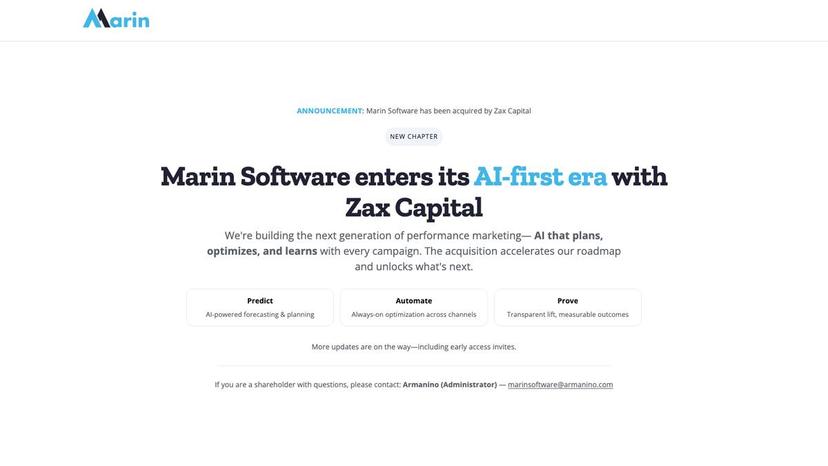
Marin Software is the legacy name on this list, and it has had an eventful couple of years: a plan of dissolution, Chapter 11, and a re-emergence under new ownership, with the homepage now announcing its acquisition by Zax Capital. The product, MarinOne, is cross-channel paid media optimisation across paid se...
Meta automated rules
| Price | Free; included with every Meta ad account |
| Channels | Facebook, Instagram, Messenger and Audience Network via Meta Ads Manager |
| Key features | Rules that pause, scale or notify on conditions you set; up to 250 rules per ad account; one level of the hierarchy per rule; bulk campaign import from an Excel template |
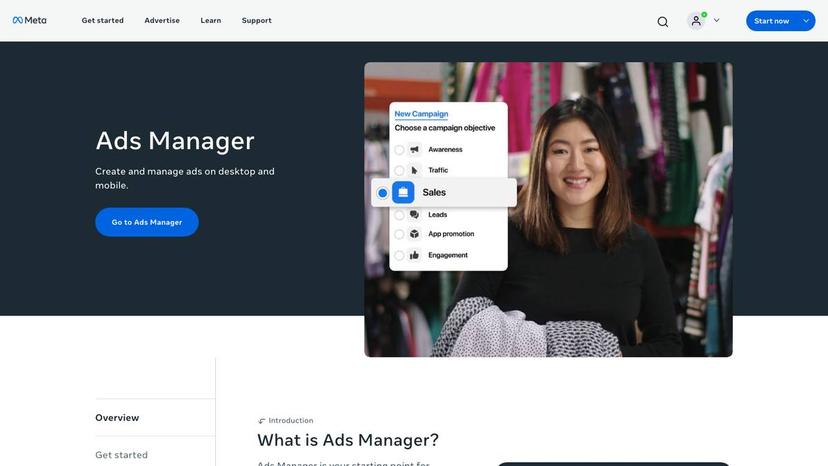
Before paying for any tool on this page, use what Meta gives you for free. Ads Manager's automated rules check your campaigns, ad sets or ads on a schedule and then pause them, change budgets or bids, or simply notify you when the conditions you set are met, with presets for problems such as auction overlap a...
About the authors
This comprehensive guide on the best Facebook Ads automation tools was compiled by a team of experienced digital marketing experts at Able CDP. Our team combines years of hands-on experience in digital marketing, data analytics, and technology solutions to provide you with insightful, accurate, and practical information.
Methodology
When preparing the comparison of the best Facebook Ads automation tools providers, our experts follow cutting edge qualitative research methodology (for an overview, see, for example, Research Methods for Business Students, (Saunders et al, 2019)). The source data analyzed during the preparation of this comparison includes:
- facts and statements published on the reviewed providers' websites at the time when they're accessed;
- interviews with digital marketers having first-hand experience of using the aforementioned software;
- published secondary sources.
While we strive to keep the page up-to-date, it is possible that the changes to the services listed above may occur that are not reflected immediately. If you notice any inaccuracies or outdated information, please contact us.